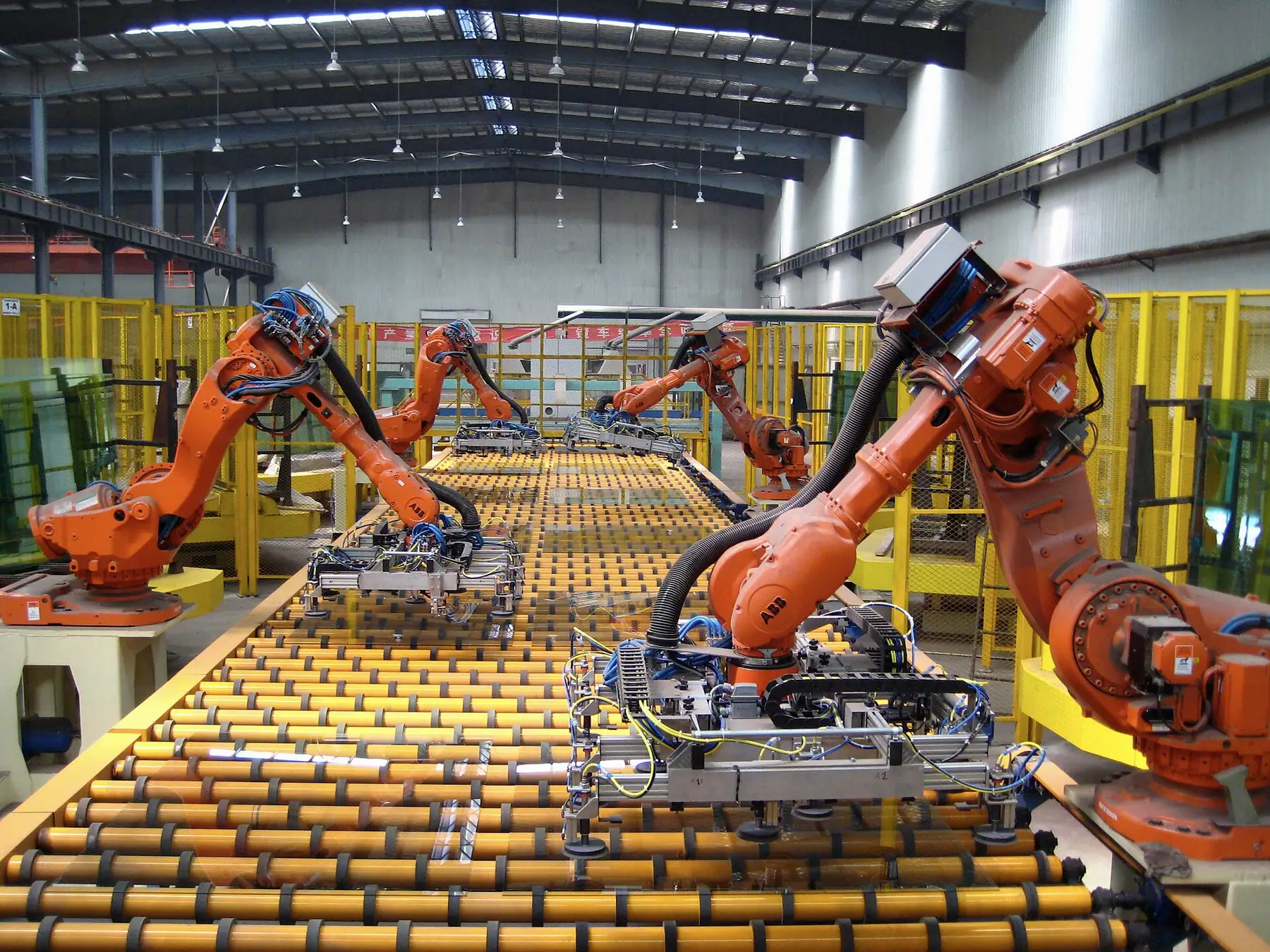
Robotic Welding Cell
A two-station robotic welding cell concept for MIG/MAG welding of chassis sub-components at an automotive supplier. While the operator loads parts at one station, the robot welds at the other; the cell runs on recipes for every variant in the part family.
01 / 03
Problem
As part variants multiplied, the repeatability of manual weld quality came to depend heavily on operator experience. Fixture adjustments took a long time at every variant change, and welding fumes and arc light created ergonomic and safety issues in the working area.
The cell also had to fit into a limited footprint without disrupting the existing line layout or blocking forklift access.
02 / 03
Engineering Approach
We started not with equipment selection but with the weld map of the part family. Weld positions, torch angles and access constraints were captured for every variant, and robot reach and collision risks were verified in simulation.
A two-station layout was chosen to balance the cycle: loading and welding run in parallel. Fixtures were built on quick-change plates with reference pins, and each variant is selected as a recipe on the HMI.
Project images
Click an image to enlarge · 4 images
03 / 03
Applied System
The system was structured so that its mechanical, electrical and automation layers were designed by one team. Main components:
System components
- Six-axis arc welding robot with a synchronised welding power source
- Two-station fixture table with pneumatic clamps and part-presence sensors
- Torch cleaning, wire cutting and anti-spatter station
- Safety fencing, light curtain and interlocked maintenance door
- PLC-based cell control and operator panel (HMI) with recipe selection
- Fume extraction connection and arc-light screens